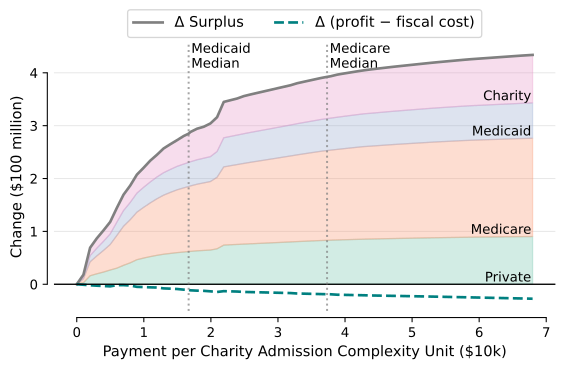
Charitable care provides free and discounted hospital access for millions of uninsured Americans. Using cross-state spillovers from insurance access expansions, we estimate charity care’s costs and document an excess crowd-out of insured patients. A model of competitive hospital resource allocations reveals that limits on discrimination in emergency care induce hospitals facing greater charitable demand to reallocate resources to scheduled care. Compensating hospitals for charitable care raises patient surplus, with most gains accruing to the insured. Patient-optimal hospital compensation is zero when welfare counts only charitable-care patients, but rises to Medicaid-comparable levels when accounting for externalities to the insured.